
Have you noticed your car’s engine drop in acceleration together with a check engine light on your dashboard lately?
The chances are that your car’s intake air temperature sensor (IAT) is damaged and that it should be fixed immediately to avoid any serious damage to the engine.
In this article, you will learn the signs of a bad IAT sensor. We will also take a look at the location and the replacement cost. Let’s begin with a quick look at the common signs to look for.
Symptoms Of A Bad Intake Air Temperature Sensor (IAT)
The most common symptoms of a bad intake air temperature sensor are engine performance issues and a check engine light on the dashboard. The performance signs you may notice are slow acceleration, hard cold start, rough idle, or misfires.
This is just a quick overview, and if you want to learn more specific information, here is a more detailed list of the signs of a bad or failing intake air temperature sensor to look for:
1. Check Engine Light
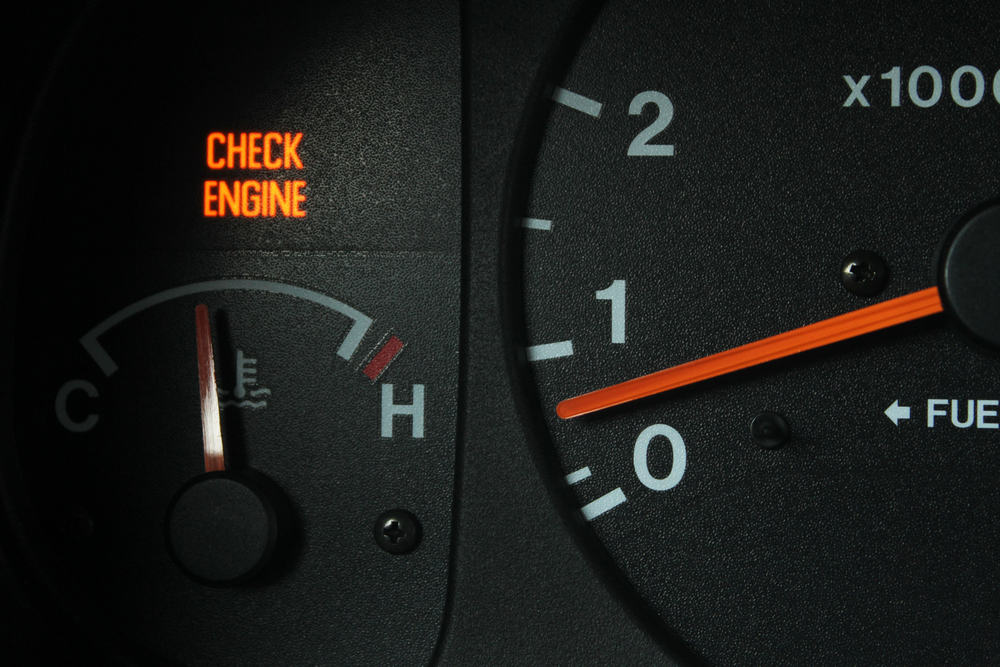
The check engine light will often appear on your dashboard when you have any issues with the IAT sensor. The engine control unit heavily monitors all sensors in a car engine, and if one fails, it will light up the check engine light immediately.
If you notice a check engine light on your dashboard, check the trouble codes with an OBD2 scanner or let your mechanic do it.
2. Drop in Acceleration
Due to a faulty intake temperature sensor, the engine control module may think that the engine’s air is colder or warmer than it actually is. A false signal may cause the PCM to miscalculate the air and fuel mixture, resulting in a drop in acceleration.
Colder temperatures require more fuel, which the engine control module is programmed to calculate.
3. Hard Cold Start Condition
The starting condition is a very critical moment for your car. Your car needs a lot of and the correct amount of fuel.
If your intake temperature sensor makes the engine control unit inject the wrong amount of fuel, you might find it a tough time trying to start your car.
4. Rough Idle
Idle is also one of these conditions when the engine is susceptible to the right air-fuel mixture. This is also a condition when you can feel the faulty air intake temperature sensor’s slightly faulty air-fuel mixture.
If you experience some small hiccups on idle, it can be a faulty IAT sensor.
5. Misfires

Misfires occur when the combustion inside the engine cylinder fails. This can be caused by either a faulty spark or a wrong air-fuel mixture.
You can feel misfires as hiccups or interruptions while you accelerate. If you can feel this on acceleration, there may be a problem with your IAT sensor.
6. EGR Valve Affected
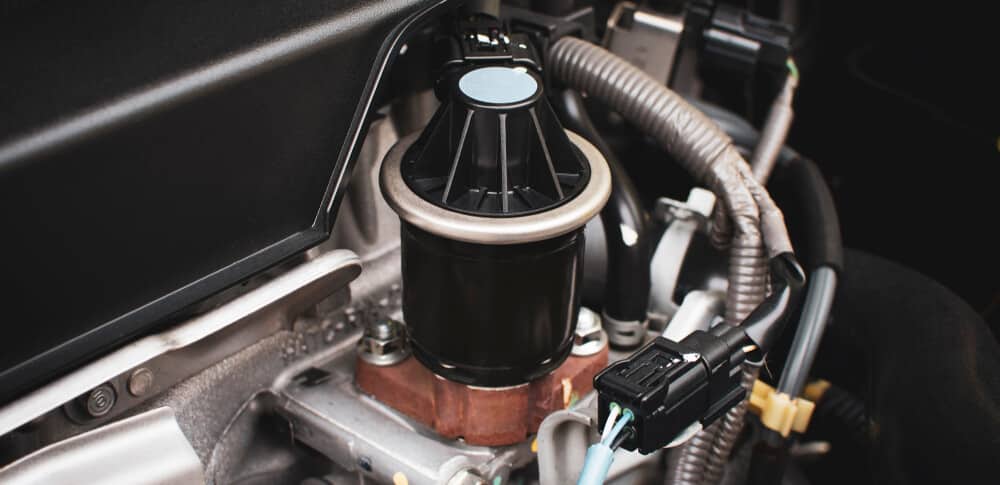
In some cars, the engine control unit uses air temperature to control the EGR valve operation. Due to a faulty IAT sensor, the function of the EGR valve can be affected too.
An EGR valve that does not function properly can cause a lot of strange symptoms in your car.
7. Poor Fuel Economy

In normal conditions, the engine computer constantly adjusts the fuel and air level mixture to ensure maximum fuel efficiency.
The engine control unit relies on the IAT sensor’s information, and if a false signal is sent, the fuel efficiency decreases or increases significantly.
If you notice a different fuel consumption than normal, it can be because of a failed IAT sensor.
What is an Intake Air Temperature Sensor?
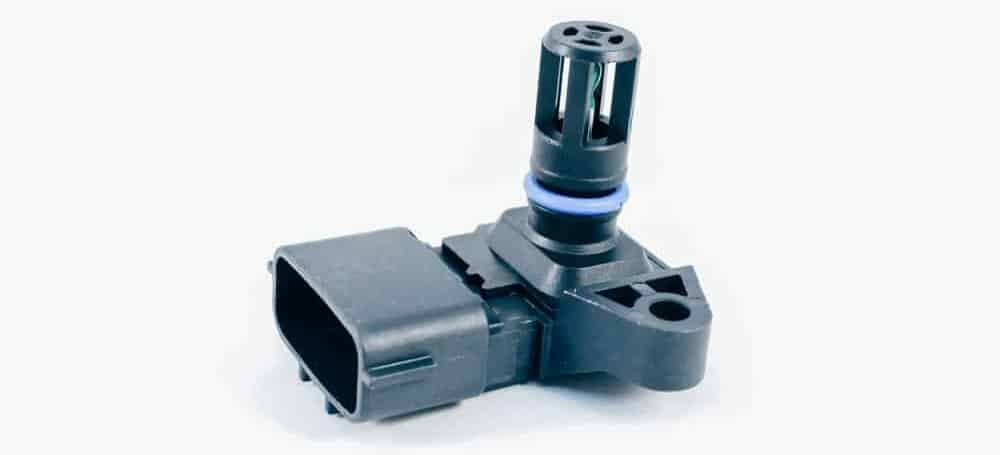
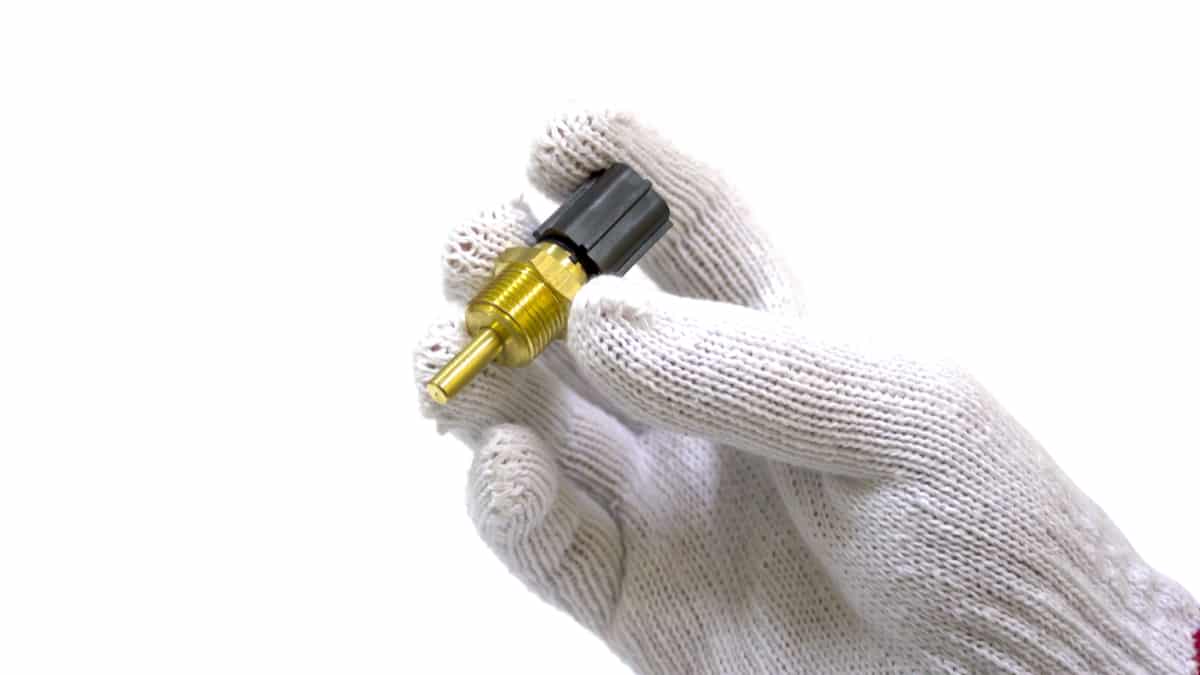
The intake air temperature sensor or IAT sensor has the core function of monitoring the air temperature entering the engine of your vehicle.
This information is beneficial for the engine control unit or ECU for many functions and calculations, such as calculating the air density for effective ignition timing and fuel efficiency.
The computer system of your engine or the PCM requires this information to stabilize and regulate the combustion engine’s air-fuel ratio. It ensures optimum combustion and efficient fuel consumption.
Where Is the IAT Sensor Located?
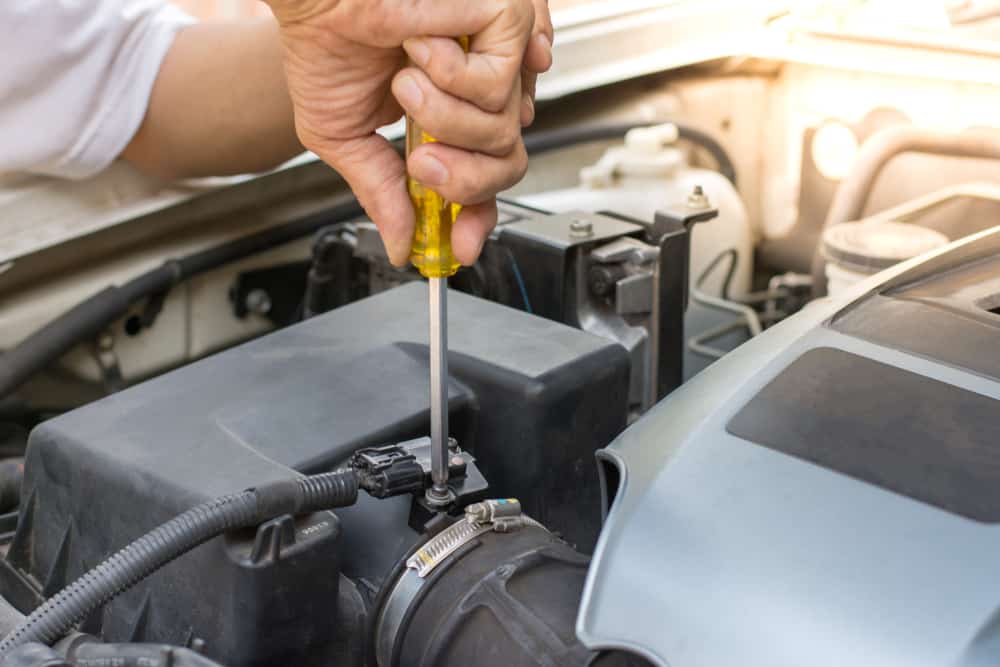
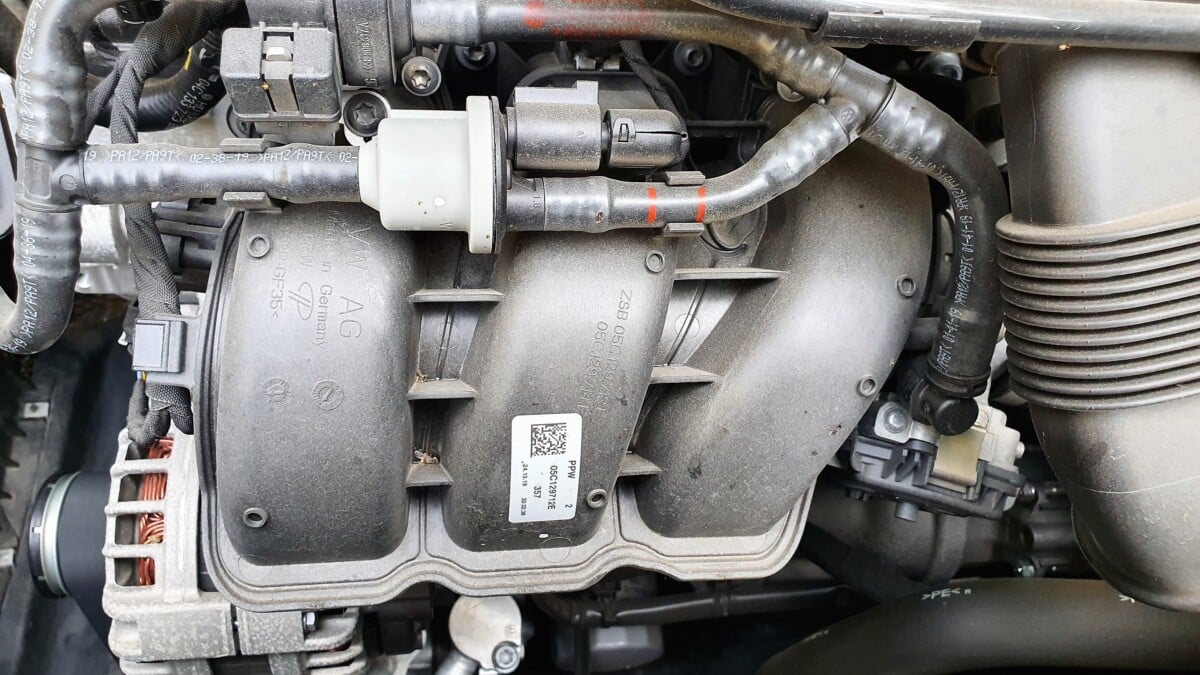
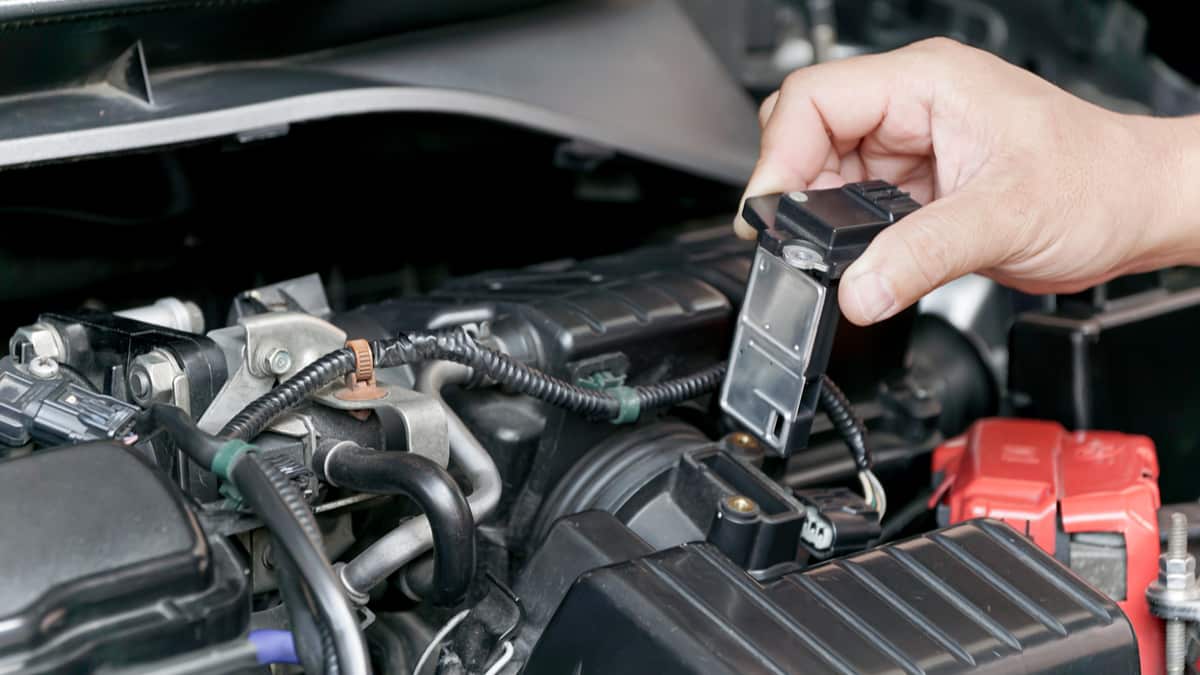
The Intake Air Temperature Sensor is located somewhere on your intake pipes between the air filter and the intake manifold. It is often integrated with the MAF Sensor.
Often, it is also installed on the intake manifold.
The intake air temperature sensor’s location is not standard due to different locations in a variety of designs. The best way to locate the IAT sensor in your vehicle is to refer to the service manual provided by your manufacturer.
Intake Temperature Sensor Diagnosis
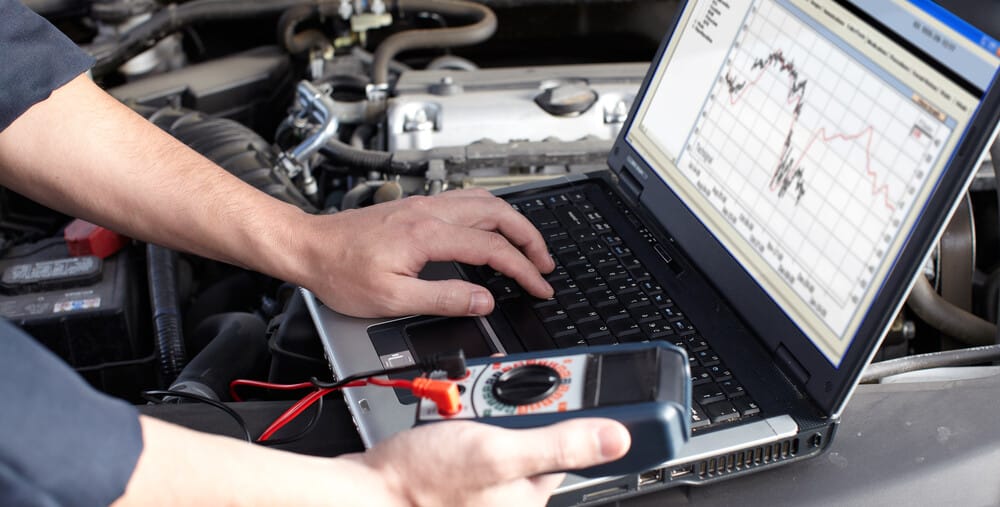
The diagnostic procedure of checking if the IAT sensor has failed is relatively easy. You can do it yourself if you have some basic knowledge and the tools available to you. Have a repair manual for your car ready.
- Connect the OBD2 scanner to your car. Turn on the engine.
- Check the live data and check the temperature of the IAT sensor. Typically, the temperature readings should be 10 degrees more or less than the vehicle’s ambient temperature, depending on the outside temperature and the engine’s temperature.
- If the readings are not realistic, there could be a problem with your IAT sensor or the wirings to it. If the temperature is over 300 degrees or has a low unrealistic value, check the MAF sensor/IAT wires as they can be damaged.
- Ohm-measure the Intake temperature sensor and make sure they are the same as your repair manual suggests. If you can find that the ohms are not correct, replace the sensor and remove the trouble codes.
- If the sensor seems correct, check and measure the sensor’s wirings and the engine control unit.
IAT Sensor Replacement Cost
The average intake temperature sensor replacement cost is between $40 and $250, depending on the car model and labor costs. An intake temperature sensor costs $20 to $150, and the labor costs $20 to $100.
If your intake temperature sensor is integrated into the MAF sensor, the part cost can increase rapidly. Some MAF sensors cost up to $400.
The replacement of an MAF sensor or intake temperature sensor is often very straightforward and can often be made yourself with basic knowledge.
In some cars, the IAT sensor can be located under the manifold in a difficult location, but this is quite rare.
If you have a new car, you want to look for technical service bulletins for your car models. In some car models, such as Chevrolet or GMC vehicles you will find bulletins about the issue.
Can a bad intake air temperature sensor cause misfire?
It is possible for a bad intake air temperature sensor to cause a misfire. The engine’s computer uses the information from the intake air temperature sensor to determine how much fuel to inject into the engine. If the sensor is not providing accurate information, it could cause the engine to misfire.
Can you clean an IAT sensor?
Yes. It is possible to clean an IAT sensor and it may fix the issue in many cases. The best way to clean an IAT sensor is to use a mass air flow cleaner or an electronic cleaner. Just spray a little on the sensor head and let it dry. Do not use a towel or similar to dry it, as this may damage the sensor.
Is the IAT sensor necessary?
Yes. The IAT sensor measures the temperature of the air going into the engine. This information is used by the engine control unit (ECU) to adjust the fuel/air mixture. This helps ensure that the engine runs at optimal efficiency and prevents knocking or pinging.
Without an IAT sensor, the ECU would have no way of knowing how cold the air entering the engine is. This could potentially lead to engine damage due to an inaccurate fuel/air mixture.
Is an IAT sensor the same as a MAF sensor?
No. An IAT sensor is not the same as an MAF sensor and they serve different purposes. However, the IAT sensor and the MAF sensor are often integrated as the same part in modern vehicles. Although they are the same part, they have completely separate circuits so they should not be considered the same.
The first thing you should do when you have problems with your car and suspect that the IAT sensor is bad is to read the error codes from the engine control module with a diagnostic scanner. In many cases, this will give you a clear picture of what is wrong with the car.
If you suspect that your IAT sensor may be going bad, but you feel that you don’t have the knowledge to diagnose it properly, it’s important to get it checked out by a mechanic as soon as possible. It’s not good for your engine to drive around with a bad IAT sensor or performance issues.
Learn more: