
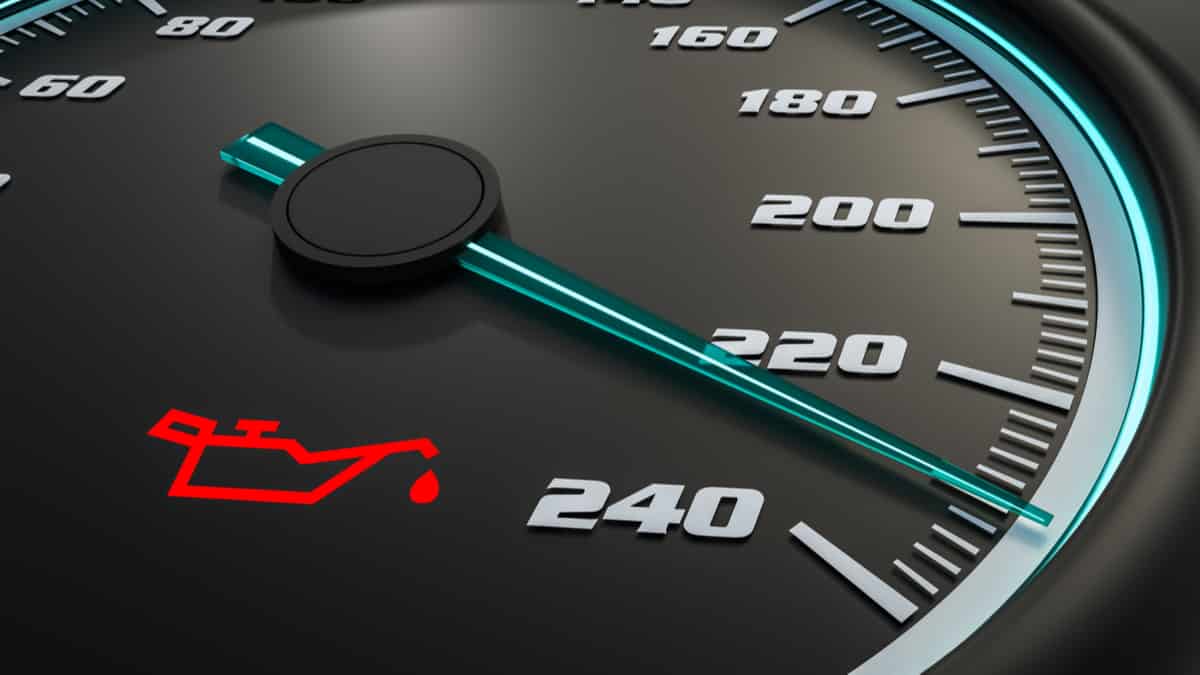
An oil-pressure warning that flickers at a stop can be confusing, especially if the engine still sounds normal. That pattern may offer a clue, but it does not tell you whether the cause is a low oil level, a faulty sensor, or a mechanical problem. The dipstick shows how much oil is in the engine; it does not confirm that oil pressure is adequate.
What Does Low Oil Pressure Mean?
Oil pressure is the force that moves oil through the engine to lubricate its moving parts. If the pressure drops below the level required for your engine, some parts may not receive enough lubrication. Continued operation can cause serious engine damage.
Oil pressure normally changes with engine speed and temperature. It is usually lower at idle and when the engine is warm. What counts as too low depends on the vehicle, so compare a gauge reading with the specifications in the service information for your engine. See our guide to normal engine oil pressure.
Symptoms of Low Oil Pressure
These signs can point to low pressure, but none confirms it on its own:
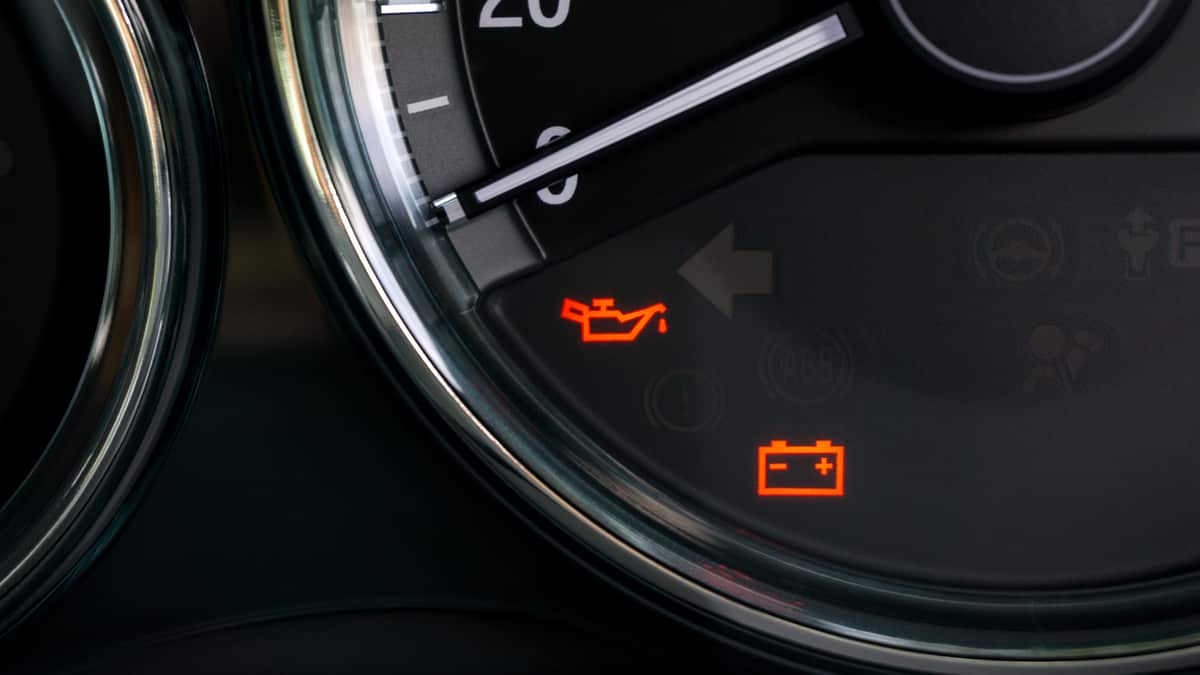
- Oil-pressure warning light or message: The most important warning to take seriously. Check your owner’s manual because dashboard symbols and messages vary.
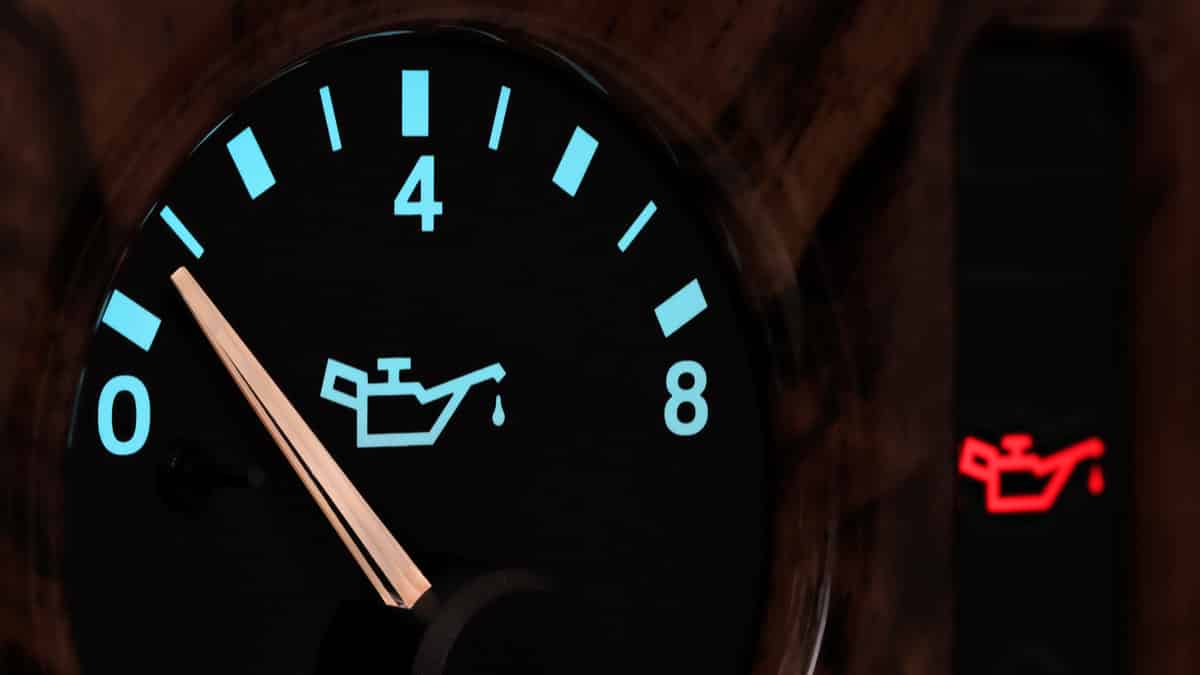
- Low reading on an oil-pressure gauge: Compare the reading with your vehicle’s specifications. A gauge can also have a faulty sender or wiring.
- Ticking, rattling, or knocking from the engine: These noises can have other causes, but a new engine noise combined with an oil-pressure warning is urgent.
- A warning that appears at hot idle: Pressure normally drops at idle and when oil is hot, but a warning that flickers or stays on may mean pressure is below the required level.
An engine that seizes is not an early symptom. It is one possible result of severe oil starvation. The check-engine light may also appear if low pressure affects an oil-controlled system, such as variable valve timing, but it is not a direct oil-pressure warning.
What to Do When the Oil-Pressure Warning Comes On
Follow your vehicle’s owner’s manual. In general, pull over somewhere safe and turn off the engine as soon as you can. Toyota’s owner’s manual, for example, directs drivers to stop in a safe place when the low oil-pressure warning appears.
- Park on level ground and wait as long as your owner’s manual recommends before checking the oil.
- Check the dipstick. If the level is below the minimum mark, add the oil specified for your vehicle a little at a time, then recheck it. Do not overfill.
- Look for an obvious oil leak, but do not get under a vehicle that is not safely supported.
- If the warning stays on or returns, or the engine is making a new noise, turn it off and arrange an inspection. Do not keep restarting it to see whether the warning clears.
A red oil-pressure warning is different from an oil-change reminder or an oil-level warning. The display and color vary by vehicle, so check the manual if you are unsure which warning you are seeing. You can also read more about the oil-pressure warning light.
Common Causes of Low Oil Pressure
Low oil level
If the oil level is too low, the pump may not be able to supply oil properly. Check for leaks and follow the correct procedure to check your engine oil. A normal dipstick reading does not rule out other pressure problems.
Incorrect or degraded oil
Oil that does not meet the manufacturer’s viscosity and specification can affect pressure and lubrication. Old or contaminated oil may also contribute to a problem. Check the owner’s manual or service information for the correct oil rather than choosing a thicker grade to raise the reading.
A restricted oil filter or pickup
A restriction in the oil filter or the pickup screen inside the oil pan can interfere with oil flow. Filter bypass systems vary by engine, so a warning does not automatically mean the filter is clogged. A mechanic may need to inspect the filter, pickup, and oil pan.
A worn or damaged oil pump
The oil pump circulates oil through the engine. A worn pump or a problem with its pressure-regulating valve can cause low pressure, but these parts should not be replaced based only on a warning light. First confirm the pressure with a mechanical gauge.
Engine wear or an internal oil leak
Worn bearings or other internal clearances can allow oil pressure to escape. Internal leaks and engine wear usually require more involved diagnosis. Knocking or a gradual change in pressure can help a technician narrow down the cause, but neither identifies a failed part by itself.
A faulty oil-pressure sensor or wiring
A failed sensor, damaged connector, or wiring problem can trigger a false warning. The warning still needs to be treated as real until pressure is tested. See our guide to oil-pressure sensor symptoms.
How to Confirm Low Oil Pressure
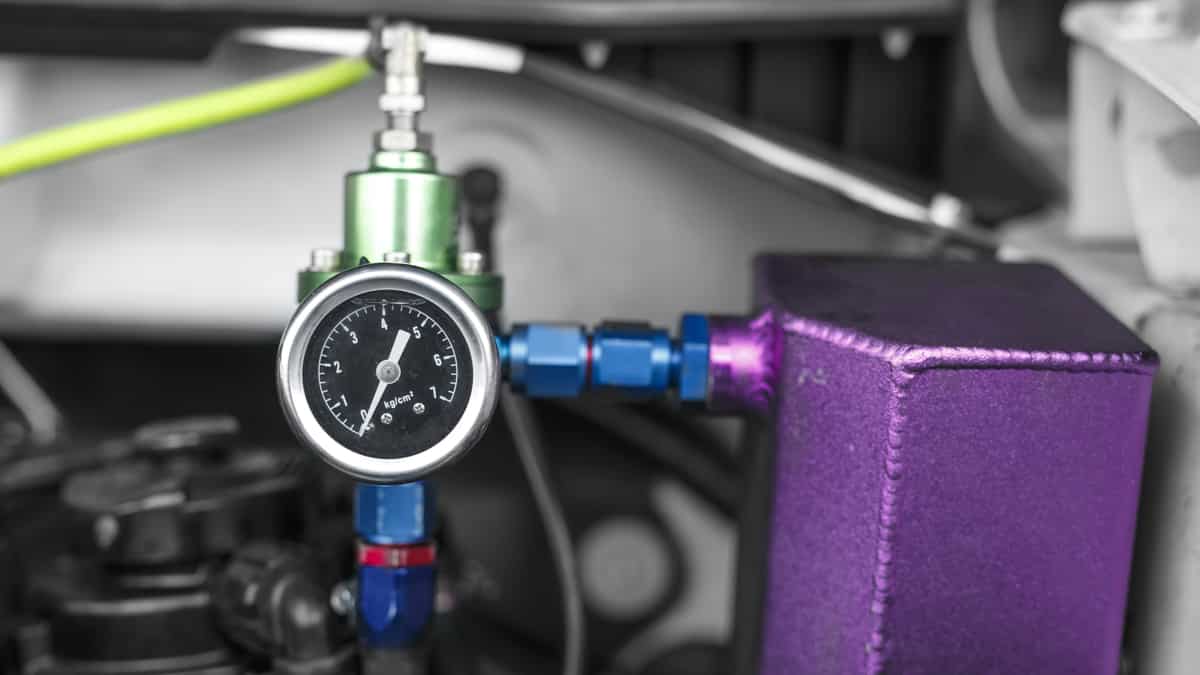
A mechanic can remove the oil-pressure switch or sensor and connect a mechanical gauge to the engine. They then compare the reading with the manufacturer’s specifications at the required engine temperature and speed.

If the mechanical reading is normal, the sensor, wiring, or dashboard display may be at fault. If it is low, the mechanic can inspect the oil level and condition, filter, pickup, pump, and internal engine components. The exact test procedure and pressure specifications vary by engine.
After the repair, verify that the pressure meets the vehicle’s specifications and that the warning stays off under the conditions that originally triggered it. Replacing a sensor or adding oil without confirming the cause may leave a real pressure problem unresolved.