

A dead battery can leave you with dim lights, a clicking sound, or no response when you turn the key. A jump-start may get the car running, but the connection points and procedure can differ between vehicles, so check the manuals before attaching anything.
This guide covers jumper cables and portable jump starters, including what to know about hybrids and electric vehicles. If the battery is cracked, leaking, swollen, or frozen, do not try to jump it. Arrange professional help instead.
How to Jump Start a Car With Jumper Cables
Use this common cable sequence only if it matches the instructions for both vehicles. Some vehicles have remote jump points or require a different connection procedure. If the manuals conflict or you cannot identify the marked points, stop and get roadside assistance.
1. Position the Vehicles
Park the vehicles close enough for the cables to reach without stretching, but do not let them touch. Select Park or Neutral as appropriate, apply both parking brakes, switch off the ignitions and accessories, and keep the manuals handy.

2. Find the Approved Jump Points
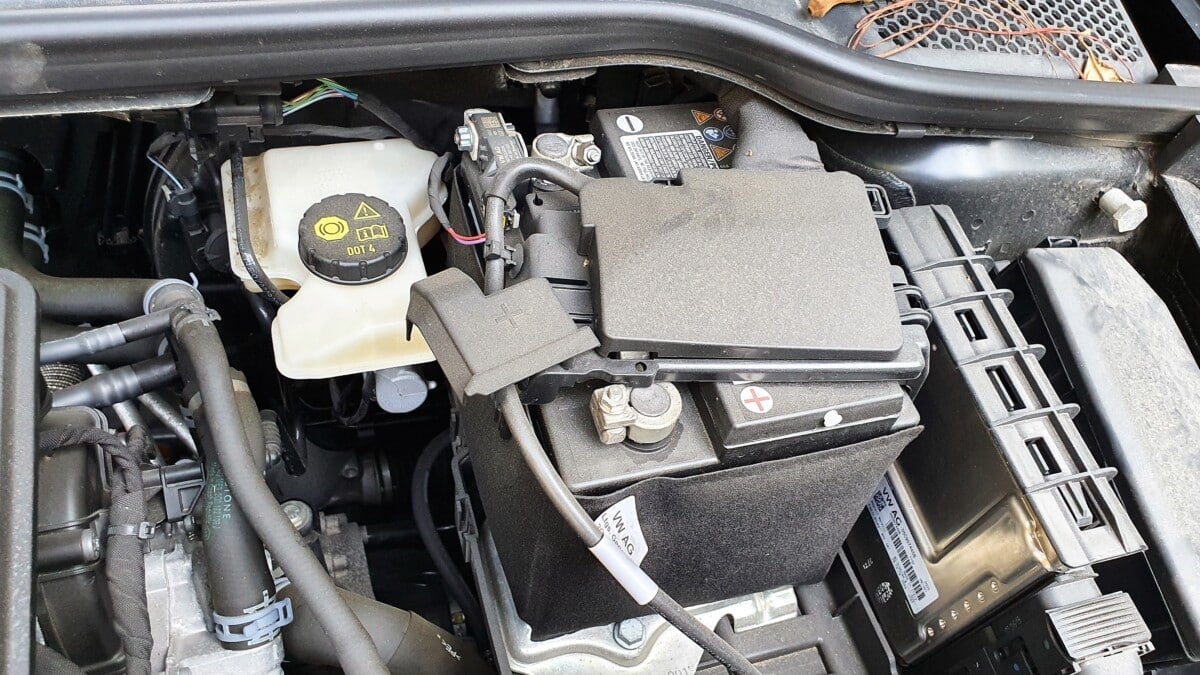
Check both owner’s manuals for the battery location, positive terminal, and designated negative or ground point. Some cars use remote jump terminals. Do not proceed if either battery is cracked, leaking, swollen, or frozen.
If you are unsure which battery post is positive or negative, see our guide to identifying positive and negative battery terminals. Do not guess based on cable color or terminal position.

3. Connect the Cables in the Specified Order
Follow the connection sequence in both manuals. A common sequence is:
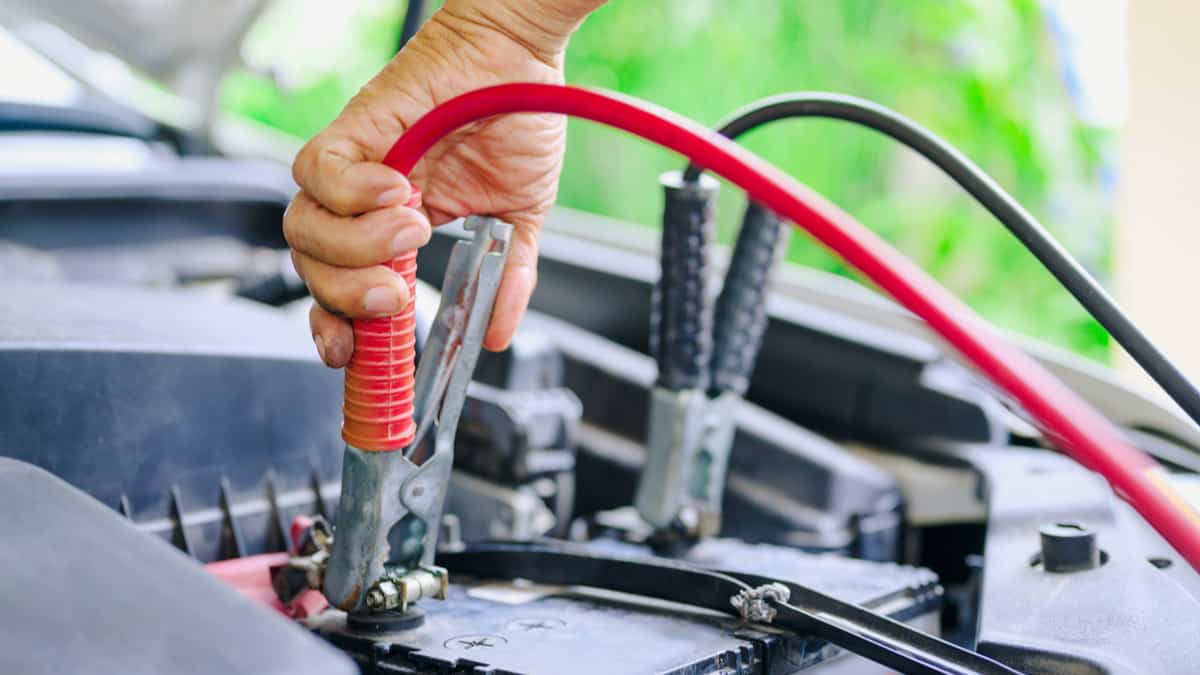
- Connect one red clamp to the disabled vehicle’s positive jump point.
- Connect the other red clamp to the booster vehicle’s positive point.
- Connect one black clamp to the booster vehicle’s negative point.
- Connect the remaining black clamp to the disabled vehicle’s designated ground point, if its manual specifies one.
This sequence is not universal. Keep the clamps from touching each other, and keep the cables clear of fans, belts, and other moving parts. Do not connect the final clamp to an unmarked metal part at random.

4. Start the Vehicles as Directed
Start the booster vehicle only if its manual instructs you to, then try to start the disabled vehicle. Follow the manuals for any waiting time. Do not repeatedly crank the engine or rev the booster vehicle unless the manufacturer specifically directs it.
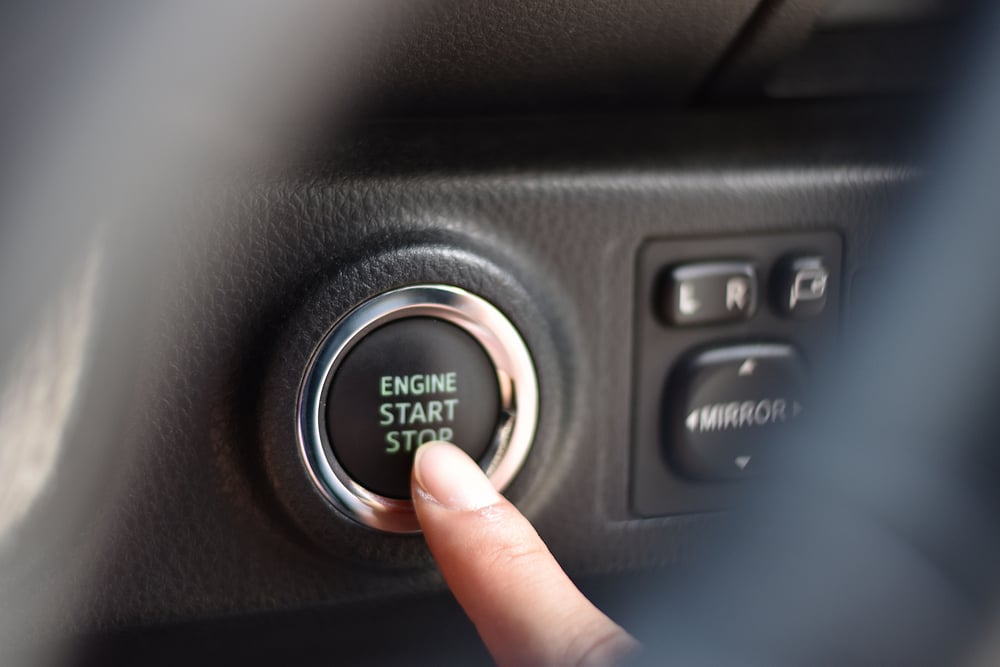
5. Disconnect the Cables
Once the disabled vehicle is running, remove the cables in the order specified by the manuals, usually the reverse of connection. Keep the clamps separated and away from moving parts as you remove them.

6. Test and Recharge the Battery
A jump-start may provide enough power to start the car, but it does not prove the battery is healthy or fully charged. Arrange a proper battery charge and test, especially if the car struggles to restart or the battery has gone flat more than once.

How to Use a Portable Jump Starter
A portable jump starter can help when another vehicle is not available. Check that the unit is charged and rated for your vehicle’s 12-volt system. Read the jump starter instructions and your vehicle manual first because the connection points and operating steps vary.
- Turn the ignition and accessories off. Confirm that the battery is not damaged, leaking, swollen, or frozen.
- Locate the vehicle’s approved positive and negative or ground jump points in the manual. Some cars do not use the battery posts directly.
- Attach the jump starter clamps in the order specified by its manufacturer and the vehicle manual. Keep the clamps apart and away from moving parts.
- Switch on the unit if its instructions require it, then attempt to start the car as directed. Avoid repeated or prolonged cranking.
- When the engine starts, switch off the jump starter if instructed, then remove the clamps in the specified order.
If the jump starter reports reverse polarity, a poor connection, or another fault, do not bypass the warning. Recheck the marked connection points and instructions. If the warning remains, stop and seek help.
A jump-start is not a battery repair. If the car does not restart after being switched off, have the battery charged and tested. A battery that repeatedly goes flat may also point to a charging-system problem or an electrical drain.
Jump-Starting a Hybrid or Electric Vehicle
Many hybrids and electric vehicles have a low-voltage battery, often 12 volts, that powers control modules and other electrical systems. This battery is separate from the high-voltage traction battery that drives the vehicle. Follow the exact instructions for your model and use only its designated low-voltage jump points.
Never connect jumper cables to the high-voltage battery or its cables. Do not assume that a hybrid or EV can safely provide a jump to another vehicle. Donor capability and procedures vary by model, so check both manuals. If you cannot confirm the approved procedure, call roadside assistance.
What to Do if the Car Still Won’t Start
If the car does not start after a correct jump attempt, stop rather than continuing to crank it. The sound and behavior can help narrow down the problem, but they do not identify a failed part on their own.
- No lights or response: Check that the clamps are attached to the approved points and have a secure connection. A severely discharged or failed battery, poor cable connection, or other electrical fault may need testing.
- A click or slow crank: The battery may still be weak, or there may be a problem with the battery cables, starter circuit, or starter. See our guides to why a car clicks when you try to start it and bad starter symptoms.
- The engine starts but soon stalls, or the battery warning light stays on: Have the charging system checked. Our guide explains how to test a car alternator.
- The battery goes flat again: Have the battery tested and check for a charging problem or electrical drain. More jump-starts will not fix the cause. See common causes of a dead car battery.
If the engine cranks normally but does not start, the problem may not be the battery. Continuing to jump it is unlikely to help. A diagnostic scan and electrical checks can identify whether the fault is in the fuel, ignition, or engine-management system.
FAQ
Can I connect the negative jumper cable to the dead battery’s negative terminal?
Some vehicles specify a battery terminal, while others require a designated ground point away from the battery. Follow the disabled vehicle’s manual. Do not choose an unpainted metal part at random.
How long should I leave the cables connected before starting?
There is no universal waiting time. Follow the instructions for both vehicles and the jumper cables. If the engine does not start after the recommended attempt, stop and diagnose the problem instead of repeatedly cranking it.
Will driving recharge a dead battery?
The alternator may restore some charge while the engine runs, but a short drive does not guarantee that a discharged battery is fully recharged. Use a suitable battery charger and have the battery tested if it went flat or does not restart reliably.
Can you jump-start a frozen battery?
No. Do not jump-start a battery that may be frozen. Let a qualified technician inspect it and follow the battery and vehicle manufacturer’s instructions.
Should I rev the booster vehicle while jump-starting?
Only if the vehicle manufacturer specifically instructs you to. Do not rev the engine as a general step because the correct procedure depends on the vehicle.
Can an electric vehicle jump-start another car?
It depends on the EV. Do not assume it can act as a donor, and never use its high-voltage traction battery for a jump. Check the EV manual and the other vehicle’s manual, or use roadside assistance.
If the car needs repeated jump-starts, have the battery and charging system tested. Finding the cause now can prevent another no-start later.