
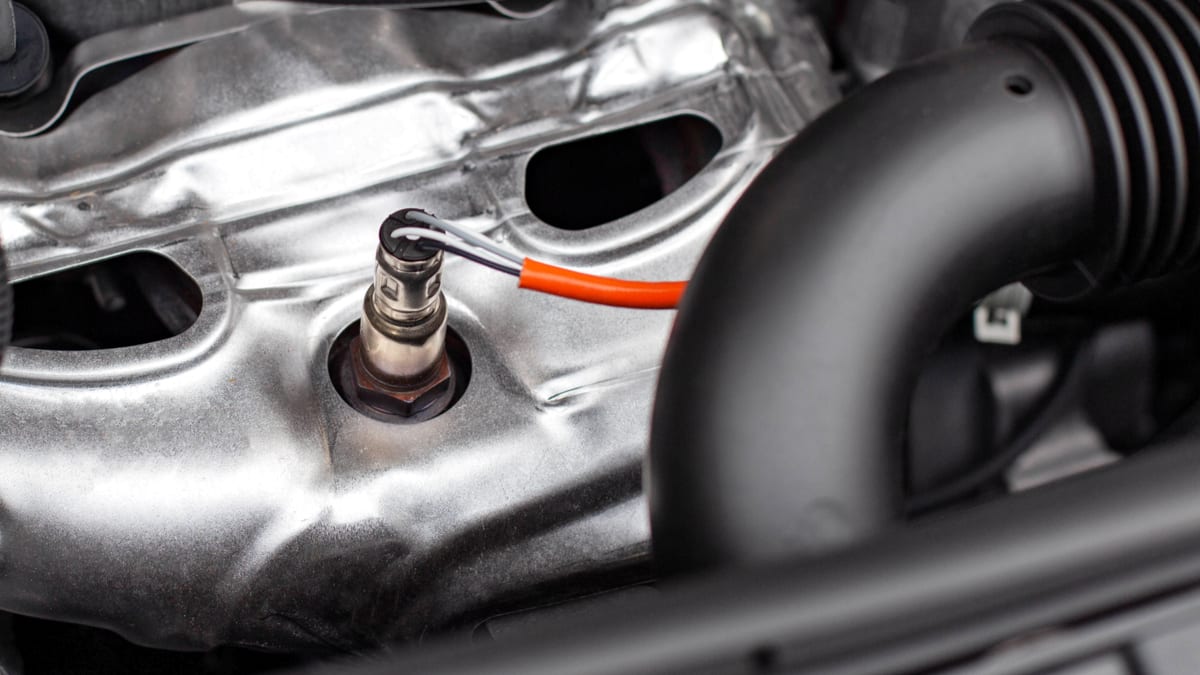
Oxygen sensors are easy to blame when the check-engine light comes on because several trouble codes mention the sensor or its circuit. But a code describes what the engine computer detected, not automatically which part failed. A wiring fault, exhaust leak, fuel problem, or another engine issue can produce similar symptoms. Here’s how to sort through the clues before buying a sensor.
5 Possible Symptoms of a Bad Oxygen Sensor
1. Check-Engine Light
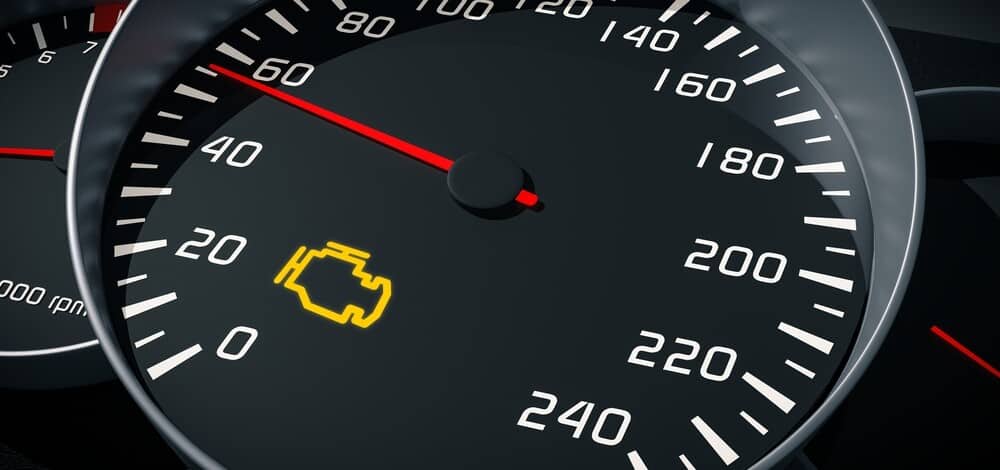
A check-engine light is a common clue, but it does not identify the failed part on its own. An oxygen-sensor code may point to a signal, heater, response, or wiring problem. An exhaust leak near the sensor can also affect its readings.
Read the stored codes before clearing them. Note the code number, the sensor position, and any related codes. For example, a lean-mixture code such as P0171 does not prove that an oxygen sensor is faulty; an intake leak, fuel-delivery problem, or inaccurate airflow reading can also cause a lean condition. See our guide to what a check-engine light means for more on reading the warning.
A flashing check-engine light usually indicates an active misfire. Reduce engine load and stop driving if the engine is shaking or running poorly; continued driving can cause further damage. Diagnose the misfire rather than assuming the oxygen sensor caused it.
2. Lower Fuel Economy
An upstream oxygen sensor helps the engine computer adjust the air-fuel mixture after the engine reaches its operating conditions. If its signal is inaccurate, fuel corrections may be affected. A change in fuel economy can be one clue, but it can also come from tire pressure, driving conditions, a dragging brake, an intake leak, or other engine faults.
A downstream sensor usually helps the computer monitor catalytic-converter performance. Its role is different from the upstream sensor’s, so a fault in a downstream sensor may not cause the same drivability symptoms.
3. Rough Idle or Uneven Running
An oxygen-sensor fault can contribute to uneven running if it affects fuel control. However, a rough idle is more often a reason to check several systems. Ignition problems, vacuum leaks, fuel-injector faults, low compression, and airflow-sensor issues can produce similar symptoms. Our guide to common causes of a rough idle explains other possibilities.
4. Hesitation or Reduced Engine Response
If the engine hesitates when you accelerate, an incorrect air-fuel correction is one possible cause. The symptom is not specific to an oxygen sensor. Check for other codes and consider fuel supply, ignition, airflow, and exhaust problems before replacing parts. If the car loses power unpredictably or stalls in traffic, pull over safely and arrange an inspection.
5. Failed Emissions Test
A faulty sensor or heater circuit can prevent the emissions system from working as intended or cause an emissions inspection failure. Other engine and emissions faults can do the same. Use the inspection results and stored codes to guide diagnosis; do not replace a sensor solely because the vehicle failed.
What an Oxygen Sensor Does
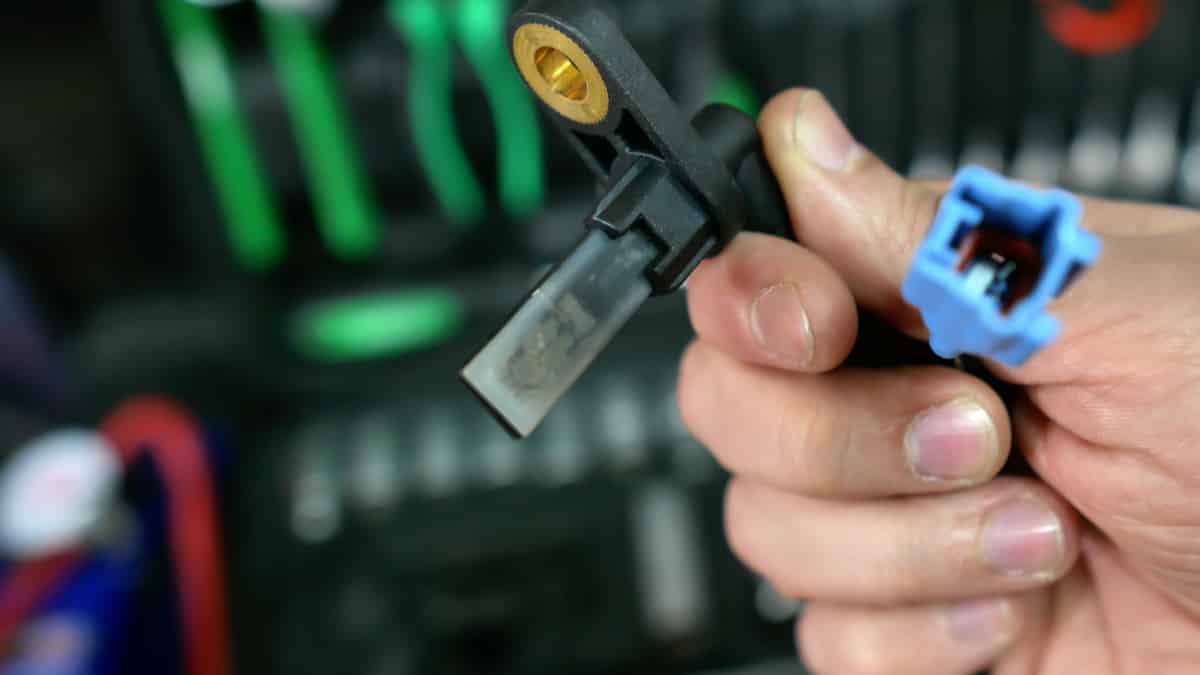
An oxygen sensor, also called a lambda sensor, measures the amount of oxygen remaining in the exhaust. The engine computer uses sensor information along with data from other systems to manage fuel delivery and monitor emissions.
Many vehicles have an upstream sensor before the catalytic converter and a downstream sensor after it. The upstream sensor mainly helps with air-fuel control; the downstream sensor usually helps monitor the converter. Some vehicles have multiple banks and sensors, and newer vehicles may use wideband air-fuel-ratio sensors. The correct test depends on the sensor type and vehicle.
Where Is the Oxygen Sensor Located?
Oxygen sensors are installed in the exhaust system. On many vehicles, an upstream sensor is located before the catalytic converter and a downstream sensor is located after it. The exact number and location depend on the engine and emissions system.
In code descriptions, “Bank 1” refers to the side of the engine containing cylinder 1. “Bank 2,” when present, is the other side. “Sensor 1” usually refers to an upstream sensor and “Sensor 2” to a downstream sensor, but check the vehicle’s service information before identifying a part.
How to Diagnose an Oxygen-Sensor Problem
Use the code as a starting point, not as an instruction to replace a part. A scan tool, wiring inspection, and vehicle-specific test procedure can help identify whether the sensor, its circuit, or another system is responsible.
- Record the codes and freeze-frame data. Check the exact code, bank and sensor position, and the conditions when the code set. A code such as P0134 describes a sensor-circuit or signal condition, but does not by itself prove that the sensor needs replacement.
- Check for related faults. Look for misfire, fuel-trim, airflow, heater-circuit, and catalytic-converter codes. Several codes together can help narrow down the problem.
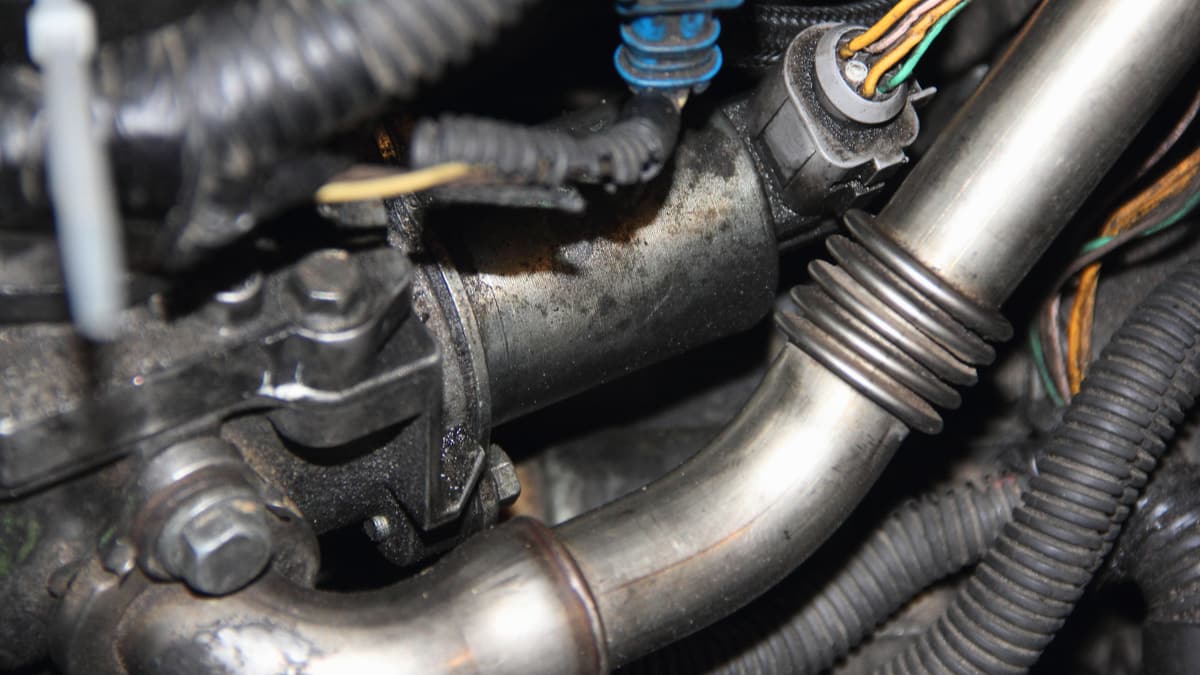
- Inspect the wiring and exhaust. With the engine off and exhaust cool, look for damaged wiring, loose or corroded connectors, and exhaust leaks near the sensor. Do not touch a hot exhaust system.
- Compare live data with the service procedure. Sensor readings vary by sensor design and operating conditions. Wideband sensors do not use the same simple voltage checks as traditional narrowband sensors. Follow the manufacturer’s test procedure and compare related readings such as fuel trims and sensor response.
- Repair the confirmed cause, then verify the repair. After the repair, clear codes only as directed by the service procedure and confirm that the relevant monitor completes without the fault returning. A warning light going out immediately does not by itself prove the repair is complete.
Do not work beneath a vehicle supported only by a jack. Oxygen sensors can be difficult to remove when their threads are corroded, and the exhaust can cause serious burns. If access, testing, or safe vehicle support is uncertain, have a repair shop diagnose it.
Can You Drive With a Bad Oxygen Sensor?
There is no single answer for every oxygen-sensor code or vehicle. If the check-engine light is steady and the vehicle runs normally, check the owner’s manual and arrange diagnosis soon. Avoid assuming that the sensor is the cause or that the car can be driven indefinitely without consequences.
If the check-engine light flashes, the engine misfires severely, stalls, overheats, smells strongly of fuel, or loses power unpredictably, pull over when safe and arrange assistance. Those symptoms can indicate a problem beyond the oxygen sensor.
Oxygen Sensor Replacement Cost
Oxygen-sensor replacement costs an estimated $440 to $523 on average, according to RepairPal’s estimate. The estimate includes an average of $347 to $387 for parts and $93 to $136 for labor, before taxes and fees. Your vehicle, sensor type, location, access, and any related repairs can change the final price. Get a vehicle-specific estimate after the fault has been diagnosed.
Do not replace every oxygen sensor just because one code appears. Ask the shop which sensor or circuit failed and what test confirmed it. A code related to fuel mixture or catalytic-converter efficiency may have another cause.
FAQ
Does an oxygen-sensor code mean the sensor is bad?
No. The code identifies a condition the computer detected. Wiring, connectors, an exhaust leak, a heater circuit, or another engine problem may be responsible. Diagnose the system before replacing the sensor.
Can a bad oxygen sensor damage the catalytic converter?
A sensor fault does not automatically damage the converter. However, an unresolved engine or fuel-control problem can increase emissions and may damage emissions components over time. Find the cause instead of assuming that replacing the sensor will solve every related fault.
Will the check-engine light turn off after replacing the sensor?
It may turn off after the fault is repaired and the relevant system tests pass, but the timing varies by vehicle. Follow the service procedure. If the light returns, read the codes again and continue diagnosis rather than replacing more parts without testing.
Can I replace an oxygen sensor myself?
It depends on the vehicle, sensor location, and your tools and experience. The exhaust must be cool, the vehicle must be supported safely if lifted, and the correct sensor must be identified before removal. A corroded or difficult-to-reach sensor may be better handled by a repair shop.
References
- Bosch: Lambda sensor testing and diagnosis
- DENSO: Engine management systems and lambda sensors
- RepairPal: Oxygen-sensor replacement cost estimate
Related guides: P0137 code, engine misfire causes, and bad MAF sensor symptoms.