
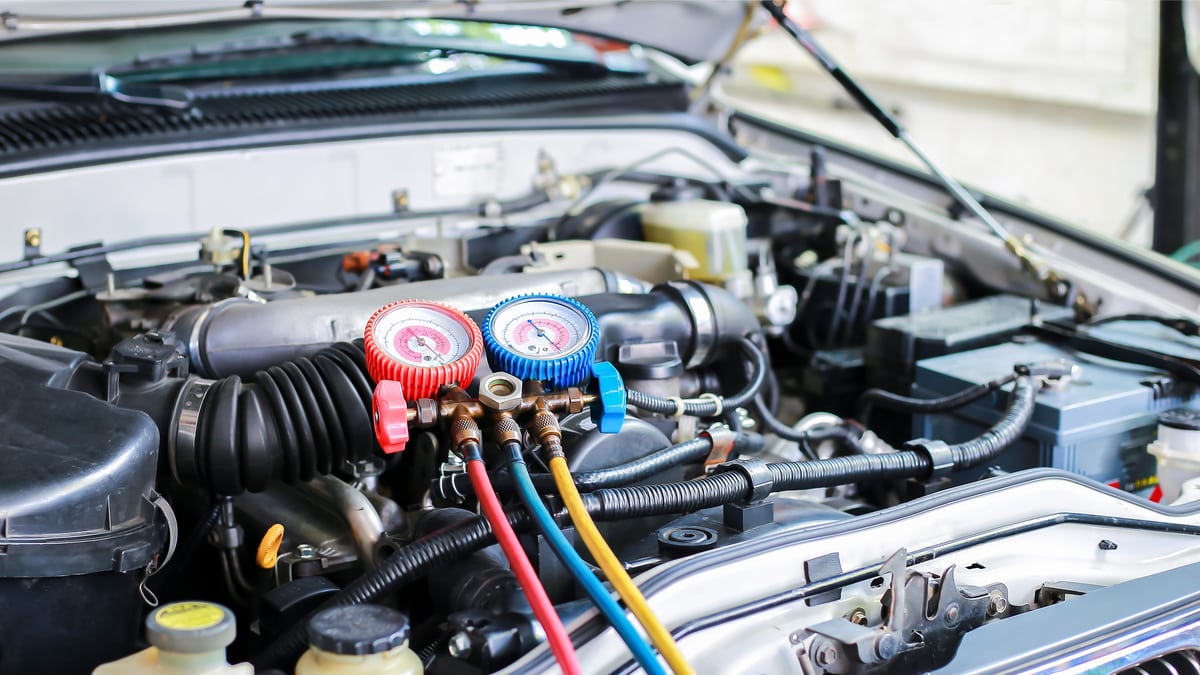
If your car’s A/C is blowing warm air, the repair could be as simple as fixing an airflow problem or as involved as replacing a major component. The only way to know the cost is to find the cause first. Adding refrigerant without checking why the system is low may leave you with the same problem again.
Here are current U.S. cost estimates for common A/C repairs, what can change the final price, and what a shop should check before recommending a repair.
How Much Does It Cost to Fix Car A/C?
Kelley Blue Book estimates an average car A/C repair at about $384 to $445. Its average estimate for an A/C compressor replacement is about $1,546 to $1,705. These are reference figures, not a quote for your vehicle. The actual price can vary significantly with the model, parts, labor rates, refrigerant type, and the fault found.
| Service or repair | Cost guidance | What to know |
|---|---|---|
| A/C repair, overall | About $384–$445 on average | KBB estimate; actual repair and price depend on the fault and vehicle. |
| Refrigerant service or recharge | About $239 on average | A recharge does not repair a leak. The system should be checked to find out why the charge is low. |
| Compressor replacement | About $1,546- $1,705 on average | Some vehicles cost more, and related repairs or parts may increase the total. |
| Leak, condenser, evaporator, electrical, or airflow repair | Varies by vehicle and fault | Access, parts, diagnosis, and refrigerant service affect the quote. |
Ask whether the estimate includes diagnosis, refrigerant recovery and recharge, parts, labor, and any follow-up testing. A quote that only lists a part may not show the complete repair cost.
What Affects the Cost of Car A/C Repair?
- The failed component: A fuse or wiring fault can cost much less to repair than a compressor or evaporator.
- Access to the part: Some components are difficult to reach and require more labor to remove and install.
- Refrigerant type and amount: Vehicles use different refrigerants and charge amounts, which affect service requirements and cost.
- Whether there is a leak: The leak must be located and repaired before the system is recharged, adding parts or labor.
- Vehicle design and local labor rates: The same repair can cost different amounts depending on the vehicle and shop.
Common Car A/C Problems and Repairs
Low Refrigerant or a Leak
A properly operating A/C system should not need refrigerant topped off on a regular schedule. If the charge is low, the system may have a leak or may have been serviced incorrectly before. A shop should inspect and test for leaks, repair the source, then evacuate and recharge the system to the vehicle’s specified amount.
Simply adding refrigerant may restore cooling temporarily, but it does not repair a leak. Refrigerant should not be released into the atmosphere. In the U.S., intentional venting is prohibited, and paid motor vehicle A/C service requires a Section 609-certified technician using approved equipment.
Clogged Cabin Air Filter or Low Airflow
If little air comes through the vents, check for an airflow problem such as a clogged cabin air filter. A restricted filter can reduce airflow, but it usually does not mean the refrigerant system needs a recharge. See our guide to bad cabin air filter symptoms.
A/C Compressor Problem
The compressor circulates refrigerant through the system. A faulty compressor can cause poor cooling, unusual noises, or other symptoms, but those signs do not confirm the compressor has failed. The shop should test the system and check for related problems before replacing it. Learn more about A/C compressor symptoms.
Condenser or Evaporator Leak
The condenser can be damaged or leak, and the evaporator can leak inside the HVAC housing. Repair cost depends on the vehicle and how much work is needed to access the failed part. Replacing an evaporator can require substantial dashboard or HVAC disassembly. See our guides to condenser problems and why a car’s A/C may not blow cold air.
How a Shop Should Diagnose the A/C
Warm air alone does not identify which part has failed. A useful diagnosis should narrow down the cause before refrigerant or parts are added.
- Confirm the complaint. Check vent airflow and temperature, fan operation, and whether the problem is constant or intermittent.
- Check basic airflow and controls. Inspect the cabin air filter, blower operation, and HVAC controls where applicable.
- Inspect the system. Look for visible damage, contamination, leaks, belt issues, and condenser fan problems.
- Test pressures and system operation. Use the vehicle’s service information and the correct equipment. Pressure readings need to be interpreted alongside operating conditions and refrigerant type.
- Find and repair leaks before recharging. Use an appropriate leak-test method and repair the confirmed source.
- Verify the repair. Charge the system to specification and confirm it cools properly under the conditions specified by the manufacturer.
Because A/C service involves pressurized refrigerant and specialized recovery equipment, don’t loosen A/C lines or vent refrigerant to test the system.
FAQ
How much does it cost to recharge car A/C?
Kelley Blue Book lists an average A/C recharge estimate of about $239. Prices vary by vehicle and refrigerant. If the refrigerant is low because of a leak, the leak needs to be diagnosed and repaired too.
How much does it cost to replace a car A/C compressor?
Kelley Blue Book’s average estimate is about $1,546 to $1,705, but the price can be higher or lower for a specific vehicle. Ask whether the estimate includes diagnosis, refrigerant service, parts, labor, and any related repairs.
Does car A/C refrigerant need to be replaced every few years?
No routine top-off interval applies to every vehicle. If the system is low, have it checked for a leak or a previous service issue instead of automatically adding more refrigerant.
Can a cabin air filter make the A/C blow warm?
A clogged cabin filter can reduce airflow from the vents. If airflow is normal but the air is warm, the cause may be elsewhere in the A/C or HVAC system.