
Car ramps can make routine work underneath a vehicle easier, but the right choice depends on more than material or lift height. Tire width, approach angle, the exact capacity rating and the surface in your garage all matter. A ramp that does not fit the vehicle or job can create a serious hazard.
Below are the ramp models from our original selection, with notes on what each is designed to do and what to verify before buying. Product listings and specifications can change, so check the current manufacturer instructions for the exact model you receive.
Mechanic Base may earn a commission if you buy through links in this article.
Our Car Ramp Picks
These products serve different purposes. The two short, 2.5-inch ramps near the bottom of the list are intended to provide limited clearance, often to position a jack. Do not treat them as a safe support for working underneath unless the manufacturer explicitly rates and instructs them for that use.
1. Nicky Nice Solid Steel Auto Ramp

This steel set is a traditional drive-on design for vehicles with enough front clearance to climb the incline without contacting the ramp. The original listing described a 35-inch ramp and a 9-inch lift, but capacity figures for this product vary between listings. Check the rating printed on the ramps and the instructions for the exact set before using it; do not rely on an older product description for the load limit.
Best suited for: Drivers looking for a conventional steel ramp for a vehicle with stock ride height, provided the exact set is rated for the vehicle and tire dimensions.
2. Black Widow PSR295 Plastic Car Service Ramps

The PSR295 is a plastic drive-on ramp with a wide tire platform. The current Northern Tool listing gives a 10,000-pound capacity per pair, a 35.5-inch length and a 12-inch surface width. Confirm that the product you buy is the same PSR295 model and read its instructions to understand how the capacity applies to your vehicle.
Best suited for: Drivers who want a lighter plastic ramp with a wider platform than many compact models. Its incline may not suit a very low vehicle, so check the approach angle and underbody clearance first.
3. Rage Powersports Low-Profile Aluminum Vehicle Service Stands

This long aluminum system is designed with low-clearance vehicles in mind. Its extended approach can reduce the chance of a front bumper or underbody component contacting a short, steep ramp. The original article listed a 95.5-inch length and 9.5-inch lift, but capacity information differs across listings. Verify the rating, included support stands and instructions for the exact set before buying or using it.
Best suited for: Owners of low-clearance vehicles who need a longer approach and are prepared to confirm the product’s current load rating and setup instructions.
4. BISupply Vehicle Service Ramp Set, 47-Inch Model

This longer plastic ramp was listed at 47 inches, with a 6.6-inch lift. Its longer approach may help with some vehicles that cannot climb a short, steep ramp, but “low profile” does not mean it will fit every lowered car. Check the ramp angle and tire-width limit against your vehicle, and confirm the current capacity rating directly on the product listing and manual. Older listings do not consistently explain whether capacity is per ramp or per pair.
Best suited for: Buyers who want a longer plastic ramp and have confirmed the exact model’s ratings and dimensions.
5. Cusco A517 SL499 Jack Assist Ramp Set

This short ramp set is intended to add a small amount of clearance for a low vehicle. A ramp used to get a floor jack into position is not automatically a support device for working underneath the vehicle. Use it only as the manufacturer instructs, then support the vehicle with equipment rated for the job and placed at the vehicle’s approved support points.
Best suited for: A small clearance increase when the product instructions and the vehicle’s service information allow that use. It is not a substitute for full-height service ramps or properly rated jack stands.
6. MaxxHaul 50516 Low-Profile Car Ramps

MaxxHaul lists the 50516 as a low-profile plastic ramp with a 2.5-inch lift and a 4,400-pound capacity per pair, or 2,200 pounds per ramp. That small lift may provide access for some jobs, but it gives limited working room. Confirm the ramp is intended for the work you plan to do, and never crawl underneath unless the vehicle is supported as directed by the product and vehicle manufacturers.
Best suited for: Low-clearance situations where a small rise is useful and the vehicle’s load at the ramped axle is within the exact model’s rating.
7. BISupply Vehicle Service Ramp Set, 35.5-Inch Model

This is a separate BISupply listing from the 47-inch set above. The older article described it as a shorter plastic ramp with a 6.3-inch lift. Because the products share a similar name and older listings can be unclear about capacity, compare the model number, ramp dimensions and pair rating before ordering. Do not assume the specifications for one BISupply set apply to the other.
Best suited for: Buyers who have verified the shorter set’s exact dimensions and capacity and whose vehicle has enough clearance for its approach angle.
8. 66-Inch Low-Profile Sports Car Lift Service Ramps

The 66-inch aluminum ramps have a longer approach than compact drive-on ramps. A listing for this style describes an 11.5-degree approach and about 7 inches of lift. A long ramp can help with a low front end, but verify the exact model’s capacity, tire width and whether the pair includes the service platforms shown in the listing.
Best suited for: Low-clearance sports cars when the longer approach fits the available garage space and the exact ramp set is rated for the vehicle.
9. Kujobuy Low-Profile Plastic Vehicle Ramps

This plastic ramp listing was marketed for low-profile vehicles and described as wider than some compact options. The original article’s capacity claim could not be confirmed against a clear manufacturer manual, so verify the rating printed on the exact ramps and its basis before considering them. Skip the product if the seller cannot provide a legible rating and safe-use instructions.
Best suited for: Consider only if the seller documents the exact model’s capacity, dimensions and intended use.
10. Discount Ramps Low-Profile Plastic Car Service Ramps

This compact plastic set was listed at 27.5 inches long and 2.5 inches high. Current listings for similar ramps show lower capacity figures than the old article’s 9,000-pound claim, so do not use that older number. Check the rating and manual for the exact set. Like the MaxxHaul 50516, a ramp this short gives limited clearance and may be useful for positioning a jack rather than providing room to work underneath.
Best suited for: A small clearance increase where the manufacturer explicitly approves the intended use and the ramp’s rating matches the vehicle.
How to Choose Car Ramps
Check the capacity rating and what it means
Ramp manufacturers may state a rating per ramp, per pair or for a vehicle’s gross weight. Read the label and manual to see exactly what the figure means. When the vehicle is on a pair, the ramps support the axle that is raised; the load on that axle is not necessarily half the vehicle’s total weight. Do not assume a pair rating is interchangeable with a gross vehicle weight rating.
Use ramps only when the manufacturer’s instructions say the vehicle and intended use are within the rating. Account for the vehicle’s load, accessories and any cargo, and do not use a ramp with an unclear or missing rating. If you cannot confirm the capacity basis, choose a different product.
Measure the tire and check the approach angle
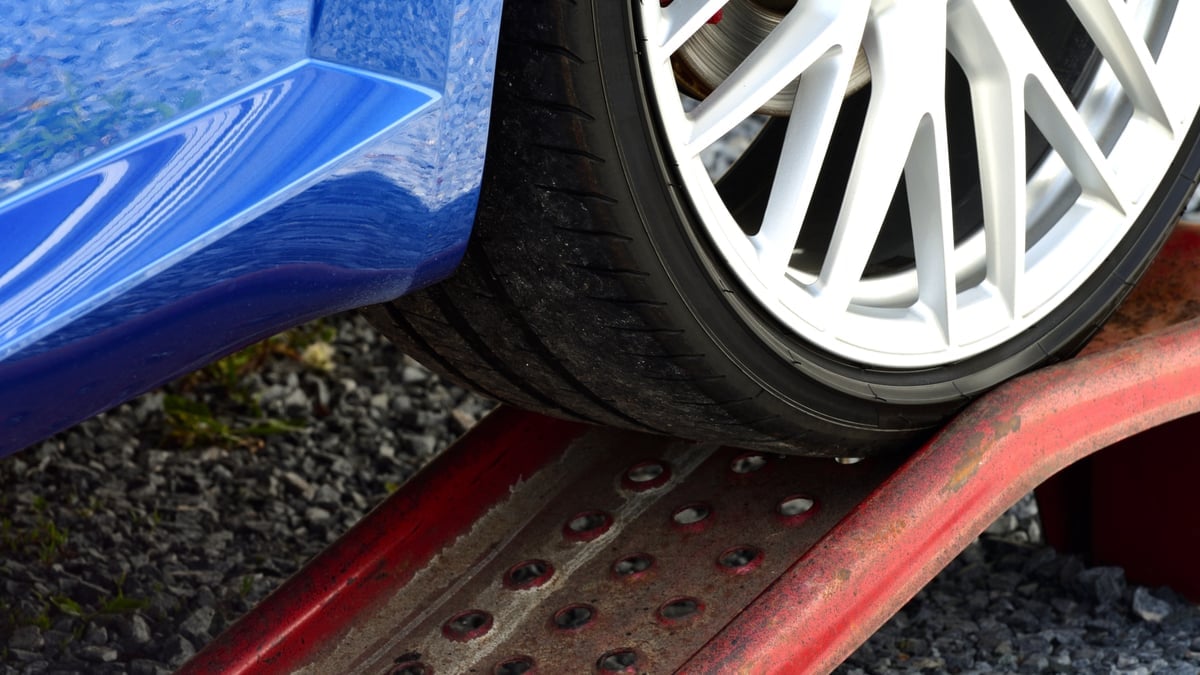
Check the tire’s actual section width against the ramp’s usable platform width. The tire needs to sit fully and squarely on the ramp. Also compare the vehicle’s front clearance and overhang with the ramp’s angle and length. A long ramp usually has a gentler approach, but measure rather than assuming it will clear a lowered bumper, splitter or underbody panel.
Choose the lift height for the job
More lift creates more working room, but a short ramp designed to give a jack extra clearance does not necessarily support a vehicle safely while someone works underneath. Check the product’s stated purpose and instructions. For work that requires a wheel to be removed, use a suitable jack and stands at the vehicle maker’s specified lift points.
Consider the material and storage
Steel ramps are heavy and can be awkward to move. Plastic ramps are often lighter and may have molded traction channels, but they still need regular inspection for cracks, deformation or damage. Aluminum systems can be long and expensive. Material alone does not establish capacity or safety; the product rating, design, condition and instructions matter.
How to Use Car Ramps Safely
Follow the ramp manufacturer’s instructions and the vehicle’s owner or service manual. The steps below are general reminders, not a substitute for those instructions. If the ramps slide, flex, crack, shift or do not fit the tires correctly, stop and do not get underneath the vehicle.
- Park on a hard, level surface. Do not use ramps on a slope, soft ground, loose gravel, a wet or slippery floor, or an uneven surface.
- Inspect both ramps for cracks, bends, loose parts or other damage. Check that the ramps are the correct type and rating for the vehicle.
- Set the ramps squarely in line with the tires, following the manufacturer’s instructions. Keep the steering wheels straight. Use a spotter only if they can stand well clear of the vehicle’s path and any ramp that could move.
- Drive up slowly and smoothly. Stop if a ramp moves or a tire is not centered. Follow the ramp instructions for positioning the tires at the top.
- Once positioned, switch off the engine, select Park or a gear as appropriate, apply the parking brake, and chock the wheels that remain on the ground. Follow any model-specific instructions that differ.
- Before getting underneath, confirm that both tires are fully seated, both ramps are stable and the vehicle is secured. Do not rock or shove the vehicle as a test, and do not rely on the parking brake alone.
- When finished, clear people, tools and obstructions from the area. Remove the chocks only when ready to drive down, then descend slowly and keep the wheels straight.
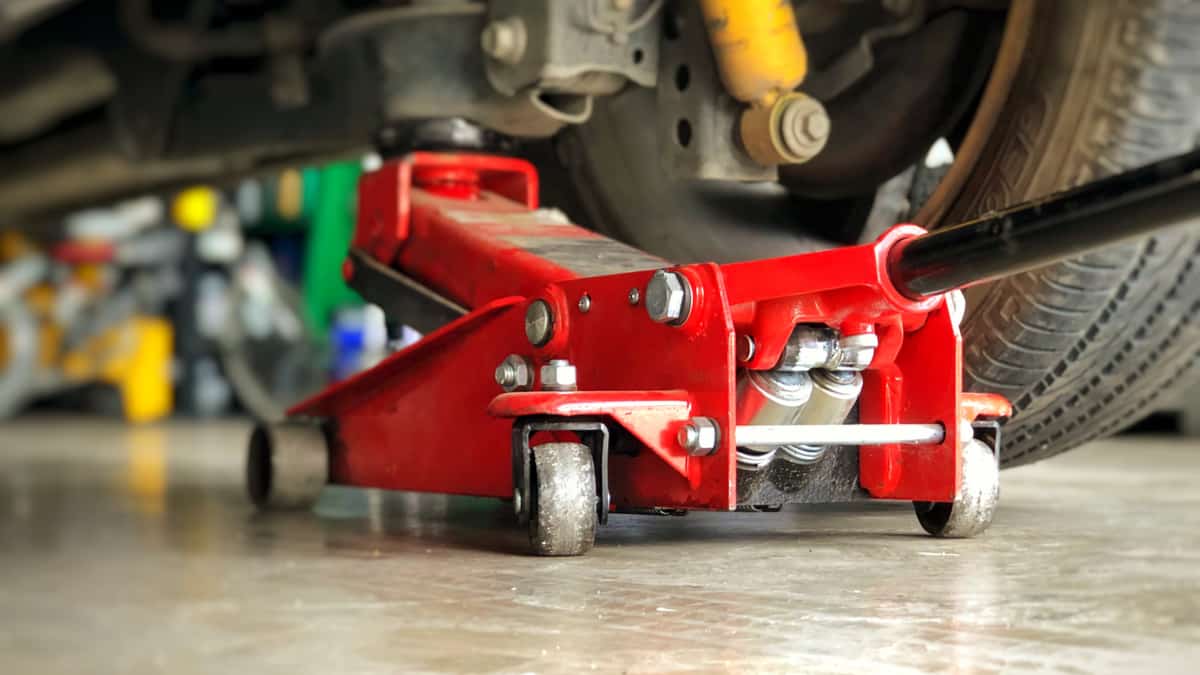
Ramps support the tires and usually raise one axle. If the job requires a wheel to come off, use a properly rated jack and jack stands in the locations specified by the vehicle manufacturer. Never work under a vehicle supported only by a jack. See our guide to choosing a floor jack and follow the vehicle’s service information.
Frequently Asked Questions
How much weight can a car ramp hold?
It depends on the exact ramp. Check whether its stated limit applies to one ramp, a pair, an axle or a vehicle’s gross weight. Follow the manufacturer’s rating and instructions for the exact model, and do not use ramps with missing or unclear capacity information.
Are car ramps safe to use?
They can be used safely when the ramps are undamaged, rated for the vehicle, placed on a hard level surface and used according to their instructions. Secure the vehicle with the prescribed parking brake and wheel chocks. Do not get underneath if a ramp shifts, the tires are not seated, or the setup is uncertain.
Can I use car ramps to change oil?
Some drive-on ramps provide enough clearance for an oil change if the vehicle and ramps are compatible and the manufacturer permits that use. Check the vehicle’s oil-change instructions and make sure the vehicle is level if the procedure requires it. See our guide on changing engine oil.
Which is safer, car ramps or jack stands?
Neither is safe when used outside its rating or instructions. Ramps support the tires and are useful for some jobs where the wheels stay on the ground. Jack stands support a raised vehicle at approved support points and are needed for many jobs that require a wheel to be removed. Use the equipment specified for the task, on a hard level surface.