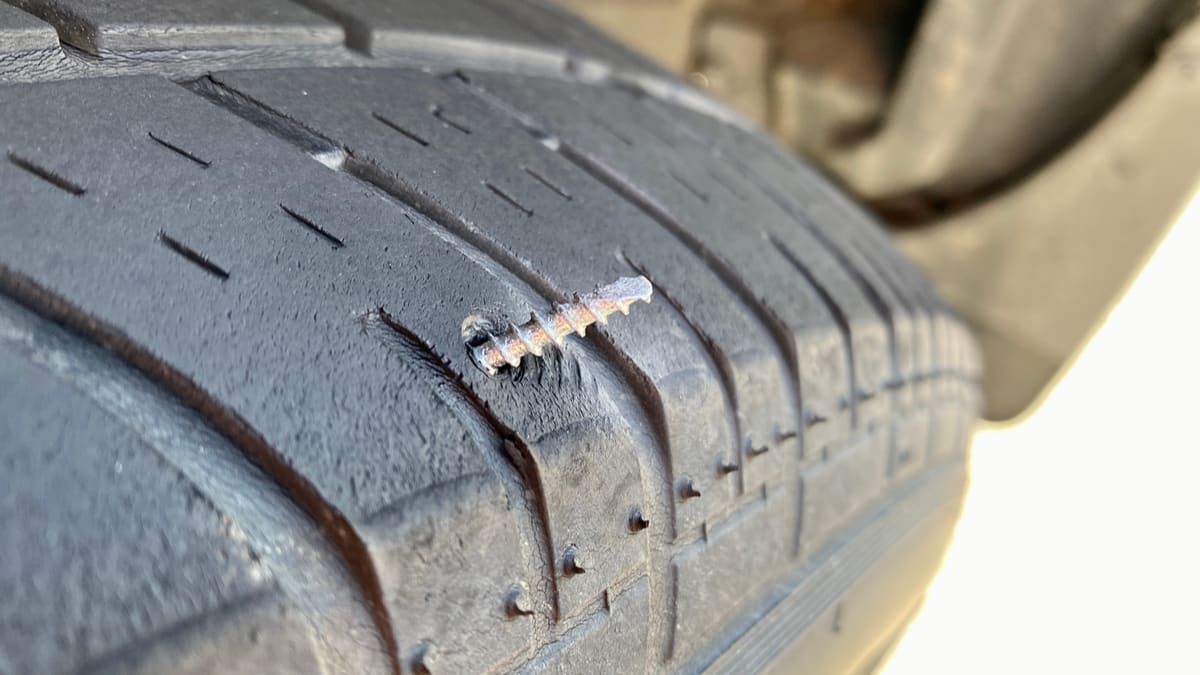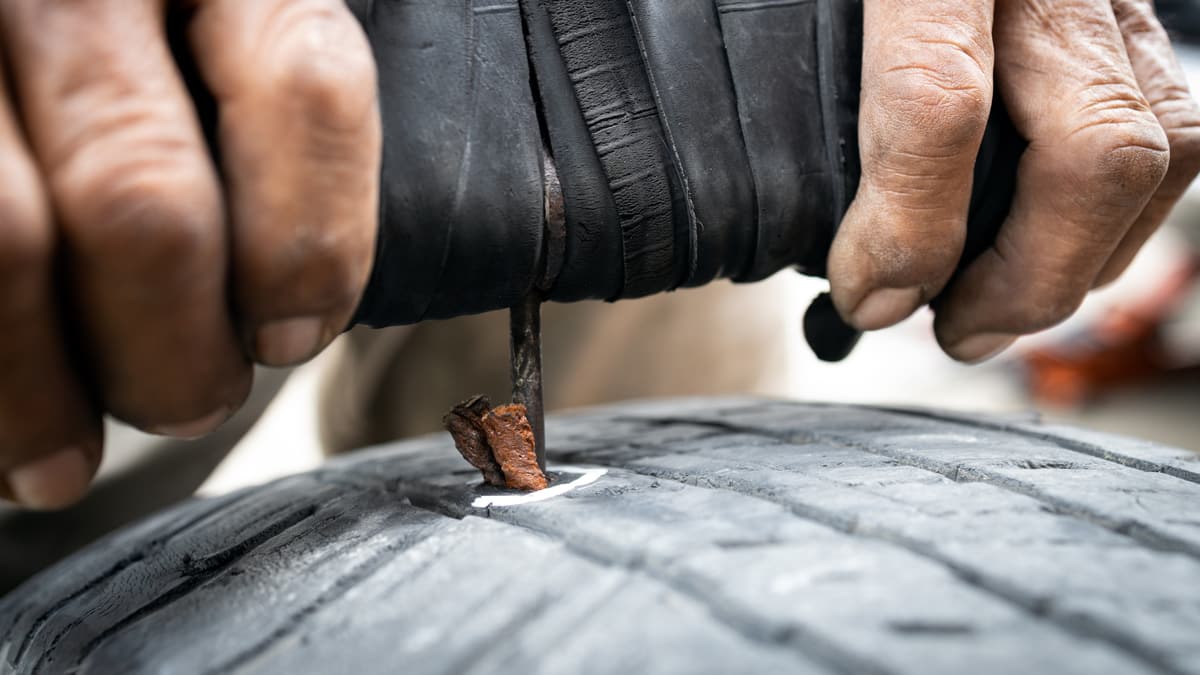

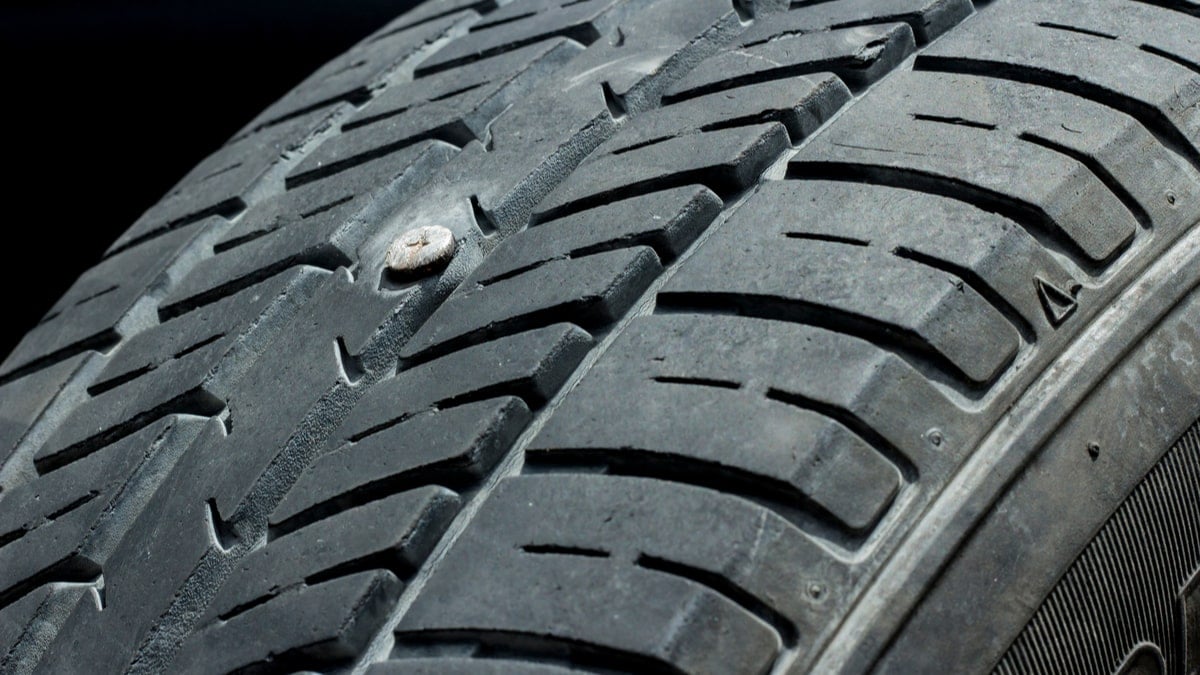
Finding a nail in a tire is stressful, especially if you need to keep driving. The safest next step depends on whether the tire is losing air, where the nail entered, and how far you need to travel. Leave the nail in place while you check the tire and arrange an inspection.
What to Do if There’s a Nail in Your Tire
Park somewhere level and away from traffic, then look at the tire without touching or removing the nail. Check the pressure with a gauge if you have one. Compare it with the pressure on the driver’s door-jamb placard or in your owner’s manual, not the maximum pressure printed on the tire. You can read more about checking your car’s tire pressure here.
If the tire is visibly flat, losing air quickly, or damaged around the sidewall, do not drive on it. Driving on a flat or significantly underinflated tire can damage its internal structure, even if you later add air. If you are in an unsafe location, prioritize getting yourself away from traffic and call roadside assistance rather than trying to inspect or change the tire beside moving vehicles.
If the tire appears inflated and is holding pressure, arrange an inspection at a tire shop as soon as practical. Avoid high speeds, long trips, and unnecessary driving before it is checked. A tire can lose air gradually, and a nail that looks small from the outside can still have damaged the tire internally.
Do not pull the nail out to see what happens. Removing it can open the puncture and cause the tire to lose air faster. A tire technician can remove it during inspection.
Can You Drive With a Nail in Your Tire?
There is no reliable way to determine from the nail alone whether the tire is safe to drive. If pressure is dropping, the tire is visibly low, or the vehicle’s handling has changed, stop driving as soon as you can do so safely. Use the spare only if you can change it in a safe location and follow the vehicle’s instructions. Otherwise, call for assistance.
If the tire is holding pressure, a short, careful trip to a nearby tire shop may be possible, but it is not a guarantee that the tire is safe. Call the shop for advice, keep the trip short, and stop if the tire-pressure warning appears or the car begins to pull, vibrate, or make unusual noise. A TPMS warning means you should check the pressure promptly; the system may not alert you to every puncture immediately.
Can a Tire With a Nail Be Repaired?

A tire shop must remove the tire from the wheel and inspect its inside before deciding whether a repair is appropriate. The location and size of the puncture matter, as does whether the tire was driven while underinflated. The shop should also check for internal damage that cannot be seen while the tire is mounted.
For many passenger and light-truck tires, USTMA guidance limits repairs to punctures in the repairable tread area that are no larger than ¼ inch (6 mm). Damage in the shoulder or sidewall generally cannot be repaired under this guidance. Tire and vehicle manufacturers may have additional restrictions, so the technician should check the specific tire’s requirements.
A proper repair uses a combination repair unit that seals the inner liner and fills the puncture channel. A plug inserted from the outside or a patch applied by itself is not considered a complete repair under USTMA’s procedures. If the puncture is outside the repairable area, too large, or accompanied by internal damage, the tire will need replacement.
When the Tire Needs to Be Replaced
Replacement is usually necessary when the puncture is in the sidewall or shoulder, exceeds the tire’s repair limit, or has caused damage that cannot be safely repaired. A tire may also be unrepairable if it was driven flat or severely underinflated and the internal inspection shows heat or structural damage.
Do not assume a tire can be repaired just because it still holds air. The shop needs to inspect the puncture and the inside of the tire. If replacement is recommended, ask whether the other tire on the same axle also needs attention; the answer depends on tread depth, tire type, and vehicle requirements.
Signs the Tire May Be Losing Air
A puncture may cause one or more of these symptoms:
- The tire looks lower than the others or repeatedly loses pressure.
- The TPMS warning light comes on.
- The vehicle pulls to one side, feels unstable, or vibrates.
- You hear a repeated thumping or flapping sound from the tire.
These symptoms do not confirm that a nail is the cause. A leaking valve, damaged wheel, or another tire problem can also cause pressure loss. Check the pressure and have the tire inspected instead of continuing to drive to see whether the symptom gets worse.
Are Tire Plugs and Sealants a Permanent Fix?
Do not treat an external plug or a can of sealant as a permanent repair. Some vehicles include a temporary tire mobility kit instead of a spare; if you use one, follow the vehicle and product instructions and arrange a professional inspection afterward. Sealant can affect the tire-pressure monitoring sensor or make a later repair more difficult, depending on the product and tire.
For repair procedures and limits, see the U.S. Tire Manufacturers Association’s tire repair guidance. For inflation-pressure guidance, see NHTSA’s TireWise information.